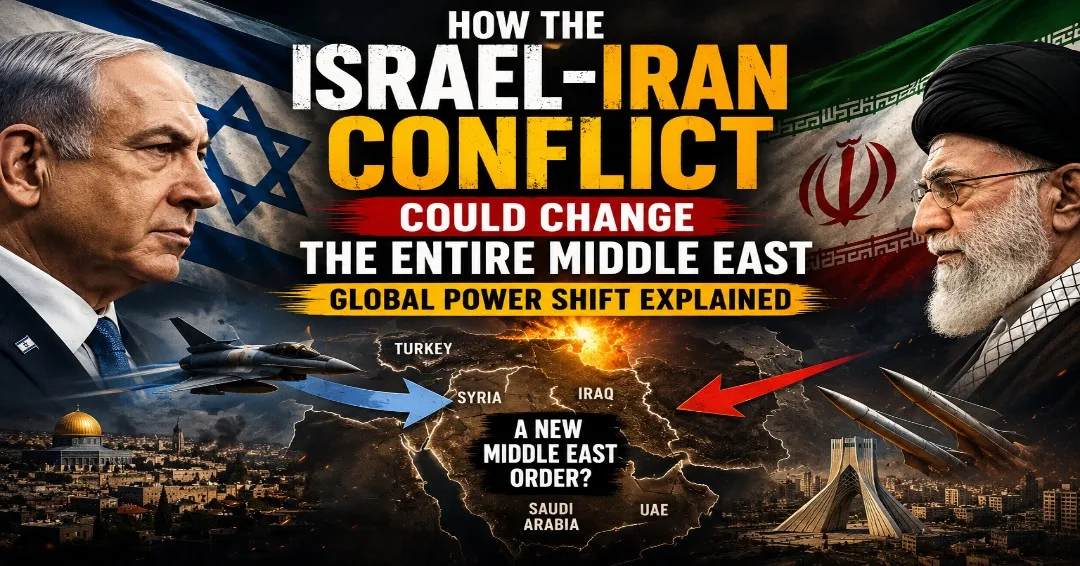
How the Israel-Iran Conflict Could Change the Entire Middle East | Global Power Shift Explained
Join Our WhatsApp Channel for Latest UpdatesHow the Israel-Iran Conflict Could Change the Entire Middle East
The Middle East is once again becoming the center of global tension.
But this time, the situation feels far more dangerous.
The growing conflict between Israel and Iran is no longer just a regional issue. It now affects:
- Global oil markets
- International trade
- Military alliances
- AI-powered warfare
- Cybersecurity
- Global inflation
- Energy security
Experts across the world are closely watching this conflict because even a small escalation could create massive global consequences.
Why Israel and Iran Are Rivals
The tension between Israel and Iran has existed for decades.
Both countries represent two completely different strategic visions for the Middle East.
| Israel | Iran |
|---|---|
| Strong ally of the United States | Opposes US influence in the region |
| Advanced military and AI defense systems | Expanding regional military influence |
| High-tech economy | Large energy and oil power |
| Strong Western partnerships | Close relations with Russia and regional militias |
Over time, both sides have accused each other of:
- Cyber attacks
- Proxy warfare
- Intelligence operations
- Military escalation
- Nuclear threats
Now, the rivalry is becoming more direct and visible.
Why the Entire World Cares About This Conflict
Most people think this conflict only affects the Middle East.
That is completely wrong.
The Israel-Iran conflict impacts the entire global economy because the Middle East controls a huge portion of the world’s:
- Oil supply
- Natural gas exports
- Shipping routes
- Energy infrastructure
One major disruption can affect fuel prices worldwide.
That means countries like:
- India
- China
- Japan
- European nations
could all face economic pressure if tensions grow further.
The Strait of Hormuz Is Extremely Important
One of the biggest global risks is the:
Strait of Hormuz
This narrow water route handles nearly:
20% of global oil transportation
If conflict disrupts this route:
- Oil prices could explode globally
- Inflation may rise rapidly
- Shipping costs could increase
- Stock markets may panic
- Global trade could slow down
Even countries far away from the Middle East would feel the economic impact.
Modern Warfare Has Completely Changed
This conflict is also showing how warfare is evolving.
Future wars are no longer fought only with tanks and soldiers.
Now countries use:
- AI-powered surveillance
- Drones
- Cyber attacks
- Satellite intelligence
- Precision missiles
- Electronic warfare systems
Israel is known for highly advanced defense technologies, including:
- Iron Dome missile defense
- AI military systems
- Cyber intelligence capabilities
Iran, meanwhile, has invested heavily in:
- Drone technology
- Missile programs
- Proxy military groups
- Cyber warfare systems
This makes the conflict technologically dangerous.
Why the US and China Are Watching Carefully
The United States strongly supports Israel.
At the same time, China has increased its influence in the Middle East because it depends heavily on regional energy imports.
This creates a complex geopolitical balance.
| Country | Strategic Interest |
|---|---|
| United States | Regional military stability and Israel security |
| China | Oil supply and economic stability |
| Russia | Regional influence and strategic partnerships |
| India | Energy imports and trade stability |
This is why even a regional conflict can become globally important very quickly.
Cyber Warfare Is Becoming the New Battlefield
One of the most dangerous parts of this conflict is invisible.
Cyber warfare.
Modern nations can now attack:
- Power grids
- Banks
- Airports
- Government systems
- Communication networks
- Military databases
without firing a single bullet.
Experts believe future geopolitical conflicts may involve:
digital attacks before physical attacks.
This changes how nations prepare for war.
Why Oil Prices Matter So Much
Whenever Middle East tensions rise, oil markets react immediately.
Higher oil prices can cause:
- Expensive fuel
- Rising transportation costs
- Inflation
- Economic slowdown
- Food price increases
Countries like India are especially sensitive because they import large amounts of energy.
That is why geopolitical stability matters even to ordinary people.
AI Warfare Is the Future
Artificial Intelligence is now becoming part of military strategy.
Modern AI systems can help with:
- Drone targeting
- Intelligence analysis
- Cyber defense
- Satellite monitoring
- Predictive military systems
Future global conflicts may depend heavily on:
- AI dominance
- Semiconductor technology
- Cybersecurity infrastructure
- Space surveillance systems
The Israel-Iran conflict is showing how future wars may look.
Could This Conflict Expand Further?
This is one of the biggest fears globally.
If tensions continue rising, the conflict could involve:
- Regional militias
- International naval forces
- Global energy infrastructure
- Cyber retaliation
- Proxy conflicts in multiple countries
That could destabilize the broader Middle East region.
What This Means for the Future
The world is entering a new geopolitical era.
Future global power may depend less on traditional armies and more on:
- Technology
- Energy control
- AI systems
- Semiconductor supply chains
- Cyber capabilities
- Strategic alliances
The Israel-Iran conflict represents much more than a regional rivalry.
It is becoming a symbol of how modern global power struggles work in the digital age.
Final Thoughts
The growing Israel-Iran conflict could shape the future of:
- Global energy markets
- International security
- AI warfare
- Cyber defense
- Military technology
- Economic stability
This is why governments, investors, military analysts, and global corporations are all closely monitoring the situation.
Because in today’s world:
A conflict in one region can instantly impact the entire planet.